Herb Dankmeyer Scholars Program Launched at Johns Hopkins

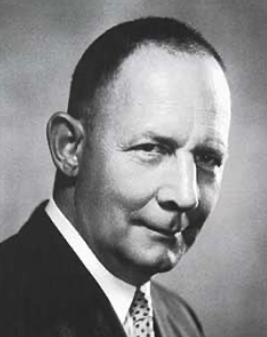
The Herb Dankmeyer Scholars Program is named in memory of Charles Herbert "Herb" Dankmeyer. It is made possible through the generosity of his son, Charles H. Dankmeyer, Jr., who has continued his father's legacy both personally and professionally. The Herb Dankmeyer Scholars Program provides full tuition support for up to two DSc in Rehabilitation Science students each year whose scholarly work has strong potential to advance limb loss care through education, leadership or clinical research.

Dankmeyer, Inc was founded in 1954 by Herb, based on the principle of being sensitive to the needs of the community and providing services to meet those needs. Herb Dankmeyer was a Baltimore native who was himself a bilateral below the knee amputee. At age 10, while roller skating to a movie matinee that cost just five cents, he lost his balance and fell under a Baltimore Transit streetcar, an accident that immediately resulted in bilateral transtibial amputations.

Herb refused to succumb to the prevailing attitude of the early twentieth century which held that the disabled were unlikely to become self-supporting, functional members of society. He was a very active child, playing in sports, driving and eventually was hired by a company to train to be a prosthetist. He worked hard, and became manager of the company's Baltimore office, building it over the course of two decades into the company's highest-performing branch. As the story goes, when that company denied Herb a raise, he left to start his own prosthetics company, Dankmeyer, Inc.

His son Charles eventually took over the company. After retiring in 2013, Charles has continued to maintain an active role in the education of prosthetics and orthotics practitioners as well as advocate for all the members of the communities they serve. Establishing this scholarship is part of Charles’ continued work. Our Dankmeyer team is proud to serve those same communities and continue the legacy of our founder.

You can read more about the details of the scholarship and Herb Dankmeyer on the Johns Hopkins Medicine website by clicking here.
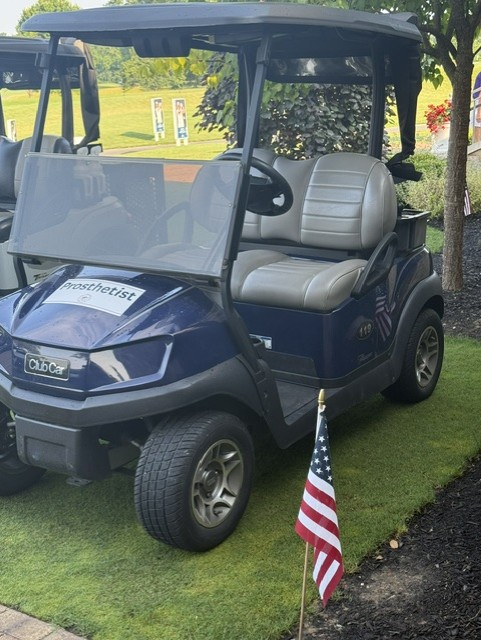
Dankmeyer Volunteers at US Adaptive Golf Open

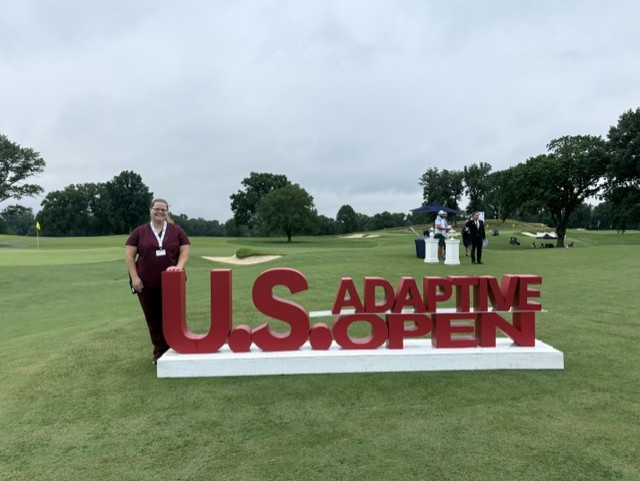
The US Adaptive Golf Open was held by the USGA at the Woodmont Country Club in Rockville, MD July 6-8, 2026. 

It is an event that highlights golfers with varying impairments, including but not limited to amputations, neurological impairments, and seated golfers. 

Sheryl Sachs, CPO and Rebecca Frost, CPO both volunteered for this event to help assist with their expertise in any ways needed. You can see pictures and video of the event by clicking here.

Thank you to Sheryl and Becca for your time and effort to this cause!

Dankmeyer Supports the So Every BODY Can Move 28 x 28 Mobility Challenge!

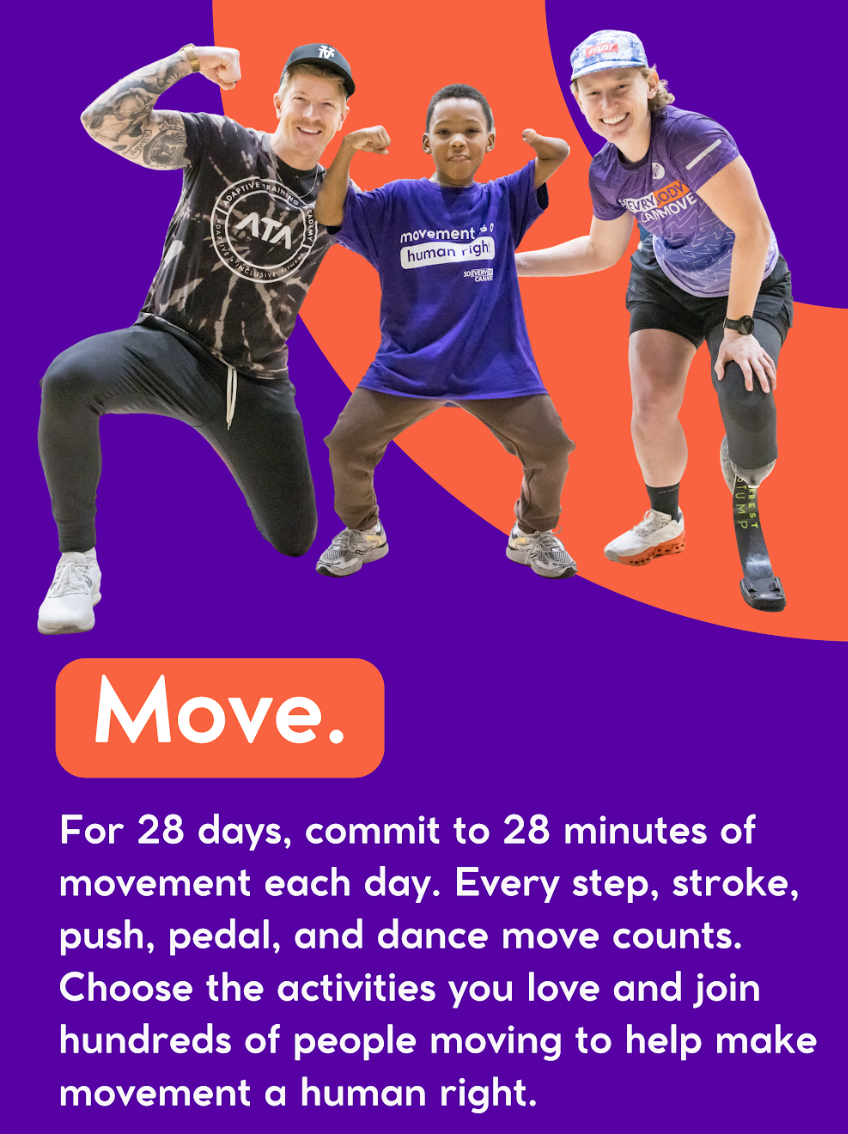
Please join the 3rd annual So Every BODY Can Move 28 x 28 Mobility Challenge this July!

Dankmeyer has been a strong advocate and early supporter of the So Every BODY Can Move (SEBCM) Initiative. We have played a large role in not only helping support the passing of this legislation in Maryland (both in 2024 and 2026), but ensuring that our patients are able to get access to this life-changing care.

We are proud to have many of our Dankmeyer team members committing to participate in the upcoming SEBCM 28 x 28 Mobility Challenge, which starts July 1st! This month-long fundraising campaign will once again inspire movement, raise awareness, recruit advocates, and fundraise to support So Every BODY Can Move.

Last year, 1,300 participants joined together to raise money and awareness. This year… the 28x28 Mobility Challenge is all about making strides. Whether you walk, run, climb, surf, bike, swim, weight lift, dance, or play…every form of movement counts! For 28 days, all you have to do is dedicate 28 minutes each day to being active. Every dollar raised helps to support our state-by-state advocacy efforts, both in Maryland and across the country!

We hope you will join us on team SEBCM Maryland--either exercising along side us, or donating to support this amazing work.

To join us and for more information, please CLICK HERE!

PARTICIPATION IS FREE AND THERE IS NO REQUIREMENT TO DONATE!


More information about So Every BODY Can Move: So Every BODY Can Move (SEBCM) is a national disability rights and healthcare justice initiative working to create life-changing access to prosthetic and orthotic (O&P) care for physical activity, independence, and overall well-being. Today, this care is often denied coverage—deemed “not medically necessary” by most public and private insurance plans—even when it enables people to work, play, and thrive.

Founded and led by people with disabilities, SEBCM centers the leadership of those with lived experience of limb loss and limb difference (LL/LD community). Across the country, grassroots advocates are organizing with support from O&P and allied health professionals to modernize outdated insurance policies through state-by-state legislative reform.

SEBCM’s flagship effort—the “28x28” campaign—aims to pass legislation in 28 states by the LA 2028 Paralympic Games, building toward broader national reform and a future where movement is a right, not a privilege.

SEBCM’s founding was made possible by a coalition of national leaders in the field, including the American Orthotic and Prosthetic Association (AOPA), National Association for the Advancement of Orthotics & Prosthetics (NAAOP), Amputee Coalition, and American Academy of Orthotists and Prosthetists (AAOP).

Summer Intern Tylor Massouda Learns about O&P

Hi! My Name is Tylor Massouda, and I have had the privilege to intern at Dankmeyer for my high school senior capstone project. I chose Dankmeyer because I myself have a passion for biomedical engineering and wanted to explore the prosthetic and orthotics field. Over the course of six weeks, I have shadowed and assisted clinicians, organized demos, tool benches and patient rooms, and have disassembled devices for donation. I am thankful to the entire Dankmeyer staff for giving me this invaluable opportunity. This experience has fostered my love for O&P, and I hope that as I begin college at the University of Miami, I am able to continue to delve into this work.

Thank you Tylor, and the best of luck as you head off to college!

Tylor’s time with us came about as part of his unique high school program. Dankmeyer’s ongoing education and training mission is very important to us, and we like to support requests like Tylor’s when we can. Students often have a personal interest in exploring the possibility of a career in the O&P field. 

Thank you to Mary Reedy, CP our Senior Prosthetist & Residency Director for coordinating Tylor’s experience.

Dankmeyer's Advocacy Contributions

Every year, the American Orthotic & Prosthetic Association (AOPA) holds a Policy Forum in Washington, DC, where AOPA members, leaders, partners, and individuals living with limb loss and limb difference from across the country gather together to engage directly with policymakers, strengthen relationships, and advance priorities critical to the O&P profession. At this year’s AOPA Policy Forum, held APril 13 - 14, 2026, one of the standout sessions featured two Dankmeyer individuals—Sheryl Sachs, CPO and patient advocate John Singer. Their session focused on the 3rd provision of an important piece of federal legislation—The Medicare O&P Patient-Centered Care Act.

Sheryl Sachs, MSPO, CPO, & John Singer at Policy Forum

According to the currently law, Medicare beneficiaries are only able to receive one orthosis per limb every 5 years. While there are ways to appeal denials within that 5 year period, the process is long and has a negative impact on patient care and patient safety. Sachs emphasized the growing importance of this patient-centered policy, and Singer helped attendees understand how the current regulations have a real impact on patient outcomes and access to care. He spoke candidly about his own experience and struggles to access the care he needs in a timely manner, and how our efforts together can help to ensure sustainable, high-quality care delivery for our patients.

Together, Sachs and Singer reinforced a clear message: the future of O&P depends on proactive engagement, collaboration, and a strong voice in policy discussions. Their session served as both a call to action and a roadmap for professionals and patients committed to advancing the field. We thank them for their support!