Supporting Breast Cancer

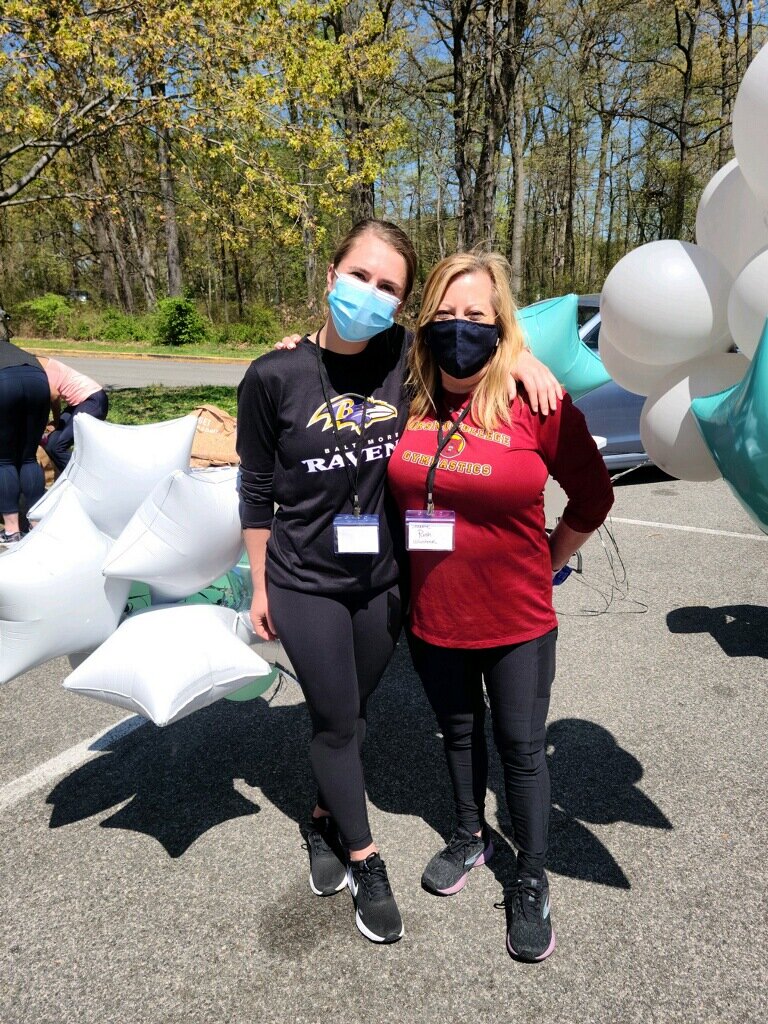
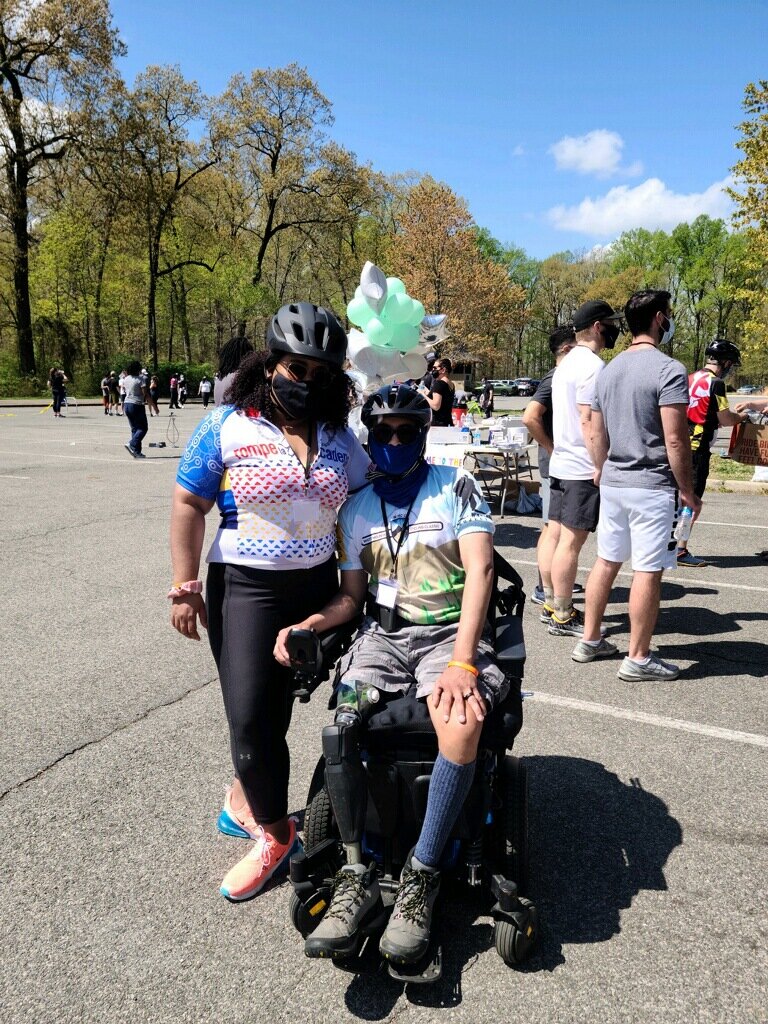
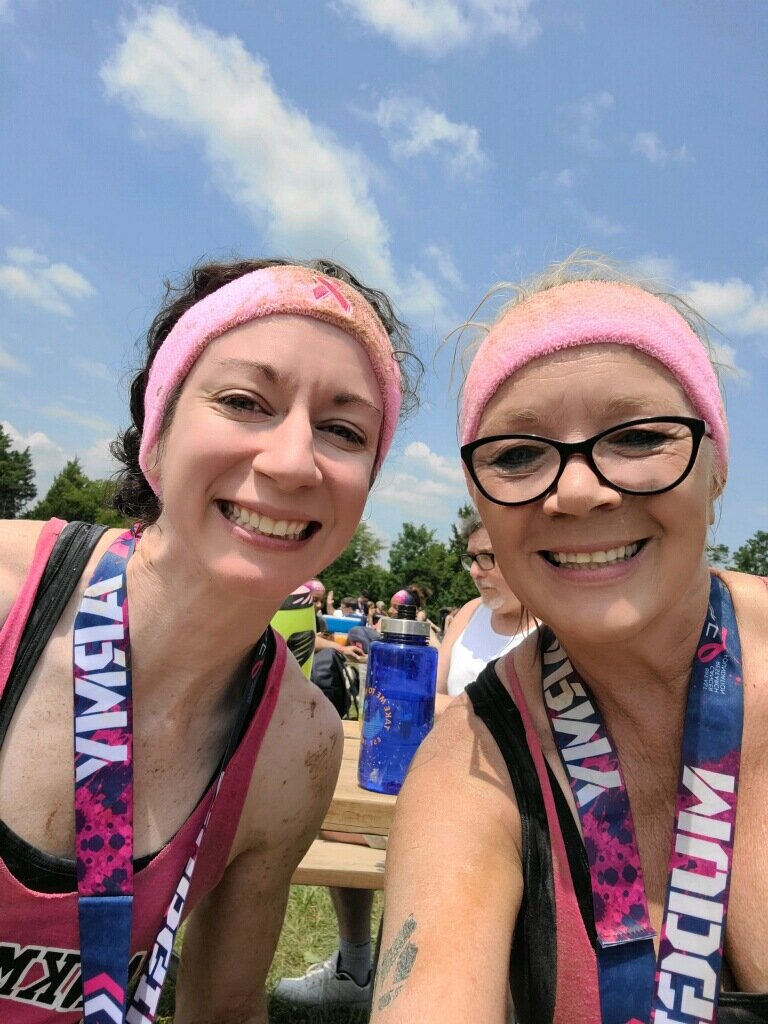
For Angie Bryl, CPO and Dawn Miranda, Prosthetist Assistant, Mud Girl Race Day came on July 24, 2021! These ladies had been planning to attend this event for months. Dubbing themselves the “Dankmeyer Pink Ladies”, this event was two-fold. Dawn was preparing to celebrate a very important birthday and wanted to honor those who had passed from breast cancer as well as survivors. Angie and Dawn prepared a team “uniform” and included the names of people they wished to honor.

That morning, they took a road trip to the High Points Event Center in Clarksburg, Maryland. They swapped green Dankmeyer t-shirts to wear bright pink to join the pink army. This is a women only 5K race that includes 17 very muddy obstacles that will prove to challenge and bond the women that run for the survivors and those who were not able to beat the demon called breast cancer. On this day, they run for all women.

Here are some statics about breast cancer. 

·       About 1 in 8 U.S. women (about 13%) will develop invasive breast cancer over the course of her lifetime.

·       In 2021, an estimated 281,550 new cases of invasive breast cancer are expected to be diagnosed in women in the U.S., along with 49,290 new cases of non-invasive (in situ) breast cancer.

·       About 2,650 new cases of invasive breast cancer are expected to be diagnosed in men in 2021. A man’s lifetime risk of breast cancer is about 1 in 833.

·       About 43,600 women in the U.S. are expected to die in 2021 from breast cancer. Death rates have been steady in women under 50 since 2007, but have continued to drop in women over 50. The overall death rate from breast cancer decreased by 1% per year from 2013 to 2018. These decreases are thought to be the result of treatment advances and earlier detection through screening.

A reference to breast cancer inflation can be found at the American Cancer Society. How Common Is Breast Cancer? Jan. 2021.

 Dawn has a more detailed report and more pictures in her July blog. Click here.
imagejpeg_0-7.jpg

Participation in Policy Forum and Advocacy in Limb Loss

While the purpose of our jobs is to provide orthotic and prosthetic devices to our patients, there are a lot of things that happen behind the scenes to make that happen.  This includes everything from coordinating insurance benefits for device coverage to custom fabrication of the devices.  We are in a fairly small, unknown field to the rest of the world, so in order to ensure that we can continue to treat patients in our communities with the best care, we need to ensure that the regulations from the government will allow us to do so.  This means advocating to Congress on behalf of our staff, patients, and the larger community.

Each year, the American Orthotic & Prosthetic Association (AOPA) organizes a Policy Forum.  This event aims to create an organized effort for our voices to be heard in Congress.  Prior to the COVID-19 pandemic, this annual conference in Washington, DC, was attended by individuals across the country, where they would learn about proposed legislative efforts at the federal level to support orthotic and prosthetic (O&P) care.  The first day of the forum was spent teaching individuals about the different legislative issues, proposed/introduced bills, and how to lobby members of Congress.  The second day was spent on the Hill in Washington DC, meeting with members of Congress and their staffers, urging them to support the bills and by extension, their O&P constituents. 

image0.jpeg

This year was Sheryl N Sachs’ (CPO) 5th year participating in the Policy Forum.  Sheryl initially became interested in O&P policy in 2015.  At that time, Medicare contractors had proposed substantial changes to their policy, which would significantly limit prosthetic patients’ access to care.  The O&P field came together and was able to fight against the proposal, and ultimately prevented it from passing.  Seeing how important policy was, Sheryl attended her first policy forum in 2016, and has been active in both our company, as well as the community, to be a voice for our patients.

This past April, AOPA’s Policy Forum was held virtually, and Sheryl was joined by both Amy Smith (Executive Assistant) and Marlies Berli Cabel, CPO, in participating.  During the two weeks of the Forum, they met with staffers for both of Maryland’s US Senators (Senator Cardin and Senator Van Hollen), and Maryland’s US Representatives (Representative Trone, Representative Sarbanes, and Representative Ruppersberger), to urge them to support the Medicare O&P Patient-Centered Care Act. 

We are very excited to announce that as a result of one of our meetings, Representative Dutch Ruppersberger has signed on as a co-sponsor for the bill!  We sincerely thank the Congressman for his support of our patients, to ensure that they have access to appropriate orthotic and prosthetic care.  We hope that the rest of our senators and representatives will follow his lead.

SNN.jpg

So what can we learn from this?  Everyone can be an advocate! And we still have a lot of work to do.  We are a small field, but all of our voices together can be very powerful.  To learn more about the Medicare O&P Patient-Centered Care Act, please click here.  It isn’t too late to reach out to your own representatives and ask for their support! For more information, please visit the AOPA action center, here. Add your voice!

Sheryl N Sachs, CPO

Project Lead the Way

Dankmeyer is committed to providing service to our communities in several ways. Our practitioners and technical staff members have become mentors to local high school students, who participate in STEM programs and complete research projects in the field of orthotics and prosthetics. This year, Mary Reedy, CP and Daniel Weiser, Resident Orthotist/Prosthetist had the pleasure of mentoring two incredible students in the Cecil County School of Technology Project Lead the Way program. Please read about their projects and experiences. We wish them success in their future!

Emily.jpg

My name is Emily Custer, I will be graduating from Rising Sun High School in June of 2021. I plan to attend Cecil College in the Fall of 2021 where I will be majoring in Biological Sciences. During this uncertain time, conducting a capstone project has been difficult as well as very rewarding. I chose this capstone project due to my personal experience with Drop Wrist.

The main purpose of this capstone project was to engineer an orthotic to help increase muscle mass in patients with radial nerve palsy that experienced a drop wrist with little to no hand function. The data showed significant trends, the prototype group increases the percent of muscle mass half as much as the control group. The statistical test performed on the data was known as a dependent t-test. This test concluded that the data results rejected the null hypothesis. If this experiment were conducted again, the lead engineer would improve my prototype by picking different types of material to see if the durability would be better the next time around, as well as maybe seeing if the wrist diameter increases more with different material.

One source of error that impacted the project was the time constraint due to not having enough data to run an accurate statistical analysis. Another source of error that impacted the project could be the materials used were not as durable as they could have been. Over all, this capstone project displays significant evidence, the drop wrist orthotic prototype significantly increased the percentage of muscle mass.

IMG_2801 (1).jpg

My name is Susanna Kress and I am a senior at both Elkton High School and Cecil County School of Technology. This fall I will be attending Embry Riddle Aeronautical University and majoring in Mechanical Engineering with a biomed track. 

Over the past year I have been working on my capstone project and I had the pleasure of having Mrs. Mary Reedy as my mentor. My project was to create a lower limb prosthetic device that can function for both walking and competitive swimming. I came up with this idea because my friend lost her leg and it made swimming a challenge for her. Seeing her take the prosthetic device off, swim, and then put it back on made me realize how much of a struggle she goes through every day. I wanted to try and make at least one part of her day as normal as possible. 

To fix that problem I ran a couple of tests to figure out what material would work best for the device. After doing tensile strength and water reaction tests I found that polypropylene and AMB resin were the two best materials for this device. I also came up with a design that allows for quick changing from the walking mode to swimming mode. All you have to do is pop out the ankle/shin portion out of the foot and there is another hole in the foot at an angle that is at the right angle for plantar flexion. This way allows for the amputee to do 3 out of the 4 swimming strokes.

While I was not able to make a real prosthetic, I was able to make a prototype that we printed out on a 3D printer. My main goal was for my friend to be able to walk to the pool, get in the water, and then change the mode all in seconds. With this design, I believe I was able to complete that goal.